Thursday, 17 December 2015

Book Review of Voices of the Silent Creek (4.35/5)

Day: 1180th

Blog Post: 121st

Book Review: 6th


Hello readers! I am here to share one more book review. Yeah!

I am going to share my book review of Voices of the Silent Creek by Vikkas Arun Pareek ji. Before coming to the review, I would like to thank to the author Vikkas Arun Pareek sir for approaching me to review his debut book and for his patience for this review. Now let me come to the review and detail analysis of Voices of the Silent Creek…
26847430.jpg

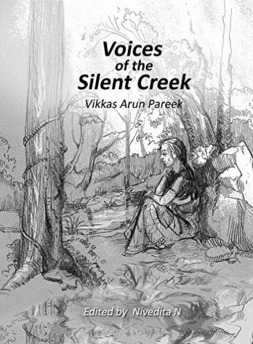
Front Cover of Voices of the Silent Creek | ©Goodreads


TITLE AND COVER:

Voices of the Silent Creek is a catchy title, suits to the content. Title indicates that book wants to convey something unspoken yet! Title itself says so much about theme and dark picture of society. The book cover is also attractive, A woman’s sketch sitting under a tree and around trees in jungle has sad emotions. We can observe many faces in background on cover.

About the Book:

Shanti is married in a prominent family but her life will never be the same for a life thrusted on her for honor of the family. She accepts her life but will she let the same fate unfold for her younger sister?

Bhano discovers the horrors of her sister’s life. Will she be able bring justice to her sister’s life and her sacrifices?

Arti finds herself strangled with choices. Will she risk her life and her family’s life to help Bhano get justice or leave her helpless?

The story set in rural India takes us through unimaginable yet common atrocities which a woman faces in today’s society. Will they fail to survive? Will they emerge stronger battling the troubles?

About the Author:

Vikkas Arun Pareeek is working for a major Indian IT company and is based in London. Voices of the Silent Creek is his first self published book. He has a passion of writing and is venturing into a vast and respected arena of expressing and writing books. You can reach out to him on vapbooksfeedback@gmail.com and Twitter @vapmail16.

12243026_10154328499759068_7512262354489

©Vikkas Arun Pareek’s facebook


SETTING

  • Theme:- The theme of Voices of the Silent Creek is based upon social issues and women’s assault, disbelief and betrayal in different relations. In short, we can categorize this novel as a tragedy in women’s life.
  • Locations:- The story of Voices of the Silent Creek runs around Bardolia village and we can see references to Melbourne (Australia) in few incidents.
  • Language:-  Author Vikkas Arun Pareek uses simple language in novel. A Voices of the Silent Creek is the debut work of author, but he uses literary and grammatical elements elegantly. Though author is based in London (UK), he didn’t forget Indianness; We can see several Hindi and other Indian words and proverbs in the book. Italic font is used properly. Words in capital letters indicate strong emotions. Appendixes attached at the end of book are plus point of book. I liked few linguistic experiments made by author; I mean use of riddle “uoorr eilps rar foft h noose.” means “your lips are soft as rose petals.” and English translations of abusive language.
  • Background:- Background of Voices of the Silent Creek’s plot is based upon contrast between rich and poor, victim and accused and suffering, fighting against tolerance, rural and urban life, disbelief and so far…
  • Author’s Writing Style:- Author Vikkas Arun Pareek ji uses descriptive style of writing to narrate the story of Voices of the Silent Creek. One can see proper words selection by the author. He uses abusive words but no one will call those words unnecessary in such incidents, so the use of abusive language is noteworthy.


CHARACTERS:

FEMALE CHARACTERS

  1. Shanti:- Author sketches Shanti as a central character in book. He introduces her as a Princess of the farm who is very simple girl and becomes a victim of relations betrayal.
  2. Bhano:- Bhano is the name of Shanti’s sister. Author portrays her character as an aware, a courageous and a brave girl.
  3. Arti Khandelwal:- Author portrays Arti’s character as another protagonist. She is from educated and modern family, she is very clever and helpful.
  4. Mano:- She is Shanti’s sister-in-law (Jethani) and parshuram’s wife. She is another victim of domestic assault, she is sympathetic for Shanti who becomes mad later.
  5.  Mamta:- She is Mohanlal’s to be wife.
  6. Sarita:- She is a twelve years old girl.
  7. Laxmi:- She is a wife of Manohar.
  8. Arya:- She is a daughter of Arti and Amol.
  9. Shabnam

MALE CHARACTERS:

  1. Bheem Singh:- He is the father-in-law of Shanti and also a Sarpanch of village. Author portrays his character as a villain in story; who shows to be a good and respected human being but he is very cruel person like evil.
  2. Parshuram:- He is the elder son of Bheem Singh. He is an another villain in the book.
  3. Mohanlal:- He is the husband of Shanti.
  4.   Krishna:- Krishna is younger brother-in-law (Devar) of Shanti and a boyfriend of Bhano.
  5. Amol:- He is a teacher and boyfriend of Arti.
  6. Ramgopal:-  He is a father of Shanti and Bhano.
  7. Manohar:- He is a brother of Shanti and Bhano.
  8. Sujay Mathur:- He is the father of Amol and father-in-law of Arti.
  9. Ravi:- He is a minor character in the book and is Arti’s friend.
  10. Surya:- He is a biological son of Shanti.
  11. Arya:- He is a son of Bhano and Krishna who born in a prison.

PLOTS:

GENERAL PLOT:

The story of Voices of the Silent Creek is described into 20 chapters. I felt first 6 chapters quite boring as they are described in slow pace but those are not less important. Whole book is a page turner from 7th chapter as it is written in fast pace. Readers may take some time to relate the story while reading introductory chapters.

Voices of the Silent Creek is mainly Shanti’s story. It shows glimpses of physical and sexual problems in women’s life. The theme is based upon Shanti’s tragic married life, sufferings and tolerance. Author shows how people helping victims have to suffer from another tragedy in their own life through the character of Arti and Amol. Author sarcastically comments on problems people have to face because of alphabetical order according to name; in that case I feel myself lucky as my name Rajesh starts with middle alphabet ‘R’. Voices of the Silent Creek is the story of Shanti’s younger sister Bhano’s married life and betrayal by her boyfriend Krishna in love and live in relationship. Arti’s efforts for justice instead of grieving are remarkable. Her character inspires readers to fight against harmony without any kind of fear and worry of defeat or loss.

Though the plot of Voices of the Silent Creek  is tragic. Author surprises readers with few romantic scenes between Arti and Amol and Shanti with her husband Mohanlal. He describes few intimate and assault scenes in book openly, though those scenes look obscene, I would show them green light because obscenity was required in those scenes.


SOCIAL PLOT:

The main plot of Voices of the Silent Creek is based upon social theme. It comments on social issues related to women’s life. Author sarcastically comments on tendency of parents and society about women’s infertility. Society’s narrow mind tendency on women’s freedom can be seen in a sentence, “young people should not be given much freedom, they will later dance on our heads.” Shanti’s sad married life is an instance of how parent’s disbelief on children can make their life hell! Author writes how Shanti and Bhano’s father-in-law Bheem Singh and brother-in-law Parshuram assaults them physically and sexually. This horrible picture of married women’s life is portrayed beautifully. Though the story in novel is fictitious, we often see same pictures of women assault and molestation by their own family in northern states on TV serials like Saavdhaan India, so the story seems realistic. Author raised few social issues and shows dark picture of society. He writes about forced immoral relationship between Shanti and Parshuram. He shows few glimpses of few other social issues like superstitions (black magic) and he tells the result of drinking alcohol indirectly. He also gives massage to not take alcohol while writing about Shanti’s father “Her father spent time between their home, police station and hospital.  He never quit drinking.”

Author Vikkas Arun Pareek comments on social like girl feticides, but at the same time he urges to save girl children when Amol says “I want to able play with my daughter.” I appreciate author’s massage to save girl child but Amol’s dislike for a boy to Arti in his sentence “I will divorce if you deliver a son” can never be appreciated. I know that author’s intention is not against boys or he doesn’t mean that but I think authors should think before writing a single sentence that negative massage shall not go from their writing.

Author criticizes on inactive and insensitive people in his quote “She cried for help but no one came. There were those who were not able to move due to shock, there were those who did not have courage to move and then there were those, who were silently enjoying the show.”  He also comments on police’s inactive reaction on Bhano’s complaint against Sarpanch Bheem Singh and his son Parshuram. He writes about the fact, how Non-Government Organization (NGOs) works better than police as usual.


QUOTES FROM THE BOOK:

  1. “She knew that she would lose, but still, she fought.”
  2.   “It doesn’t matter if you win or lose, but you will be satisfied that you tried your best, in order to save the people you love and Jhansi ki Rani loved her people very much.”
  3.   “Reading is a good habit.”
  4. “You know, I have always wondered that children with rich background are not very good in studies whereas the children with less privileged back ground are very hard working and good in studies. Look at all the board results and all the competitive exams. You look like you are from a very privileged background, why do you think this is the case?”

APPENDIXE:

We see Hindi and other regional words in so many books, but this book is quite different. No! Hindi words are used in Voices of the Silent Creek too, but A Note on (10) Names and Relations and Glossary for 23 words make this book different. Explanation and meaning of Chapattis, Dupatta, Pani Puri etc. shows author’s research and study. Definitions of these words are defined thoroughly. I won’t mention a note on names and relations in this review but I would like to mention few words from Glossary:-

1.     Chapattis = Chapati  (alternately Chapatti, Chappati or Chappathi) is an unleavened flatbread (also known as roti) from Sri Lanka, India, Nepal, Bangladesh and Pakistan. It is a common staple in South Asia as well as amongst South Asian expatriates throughout the world.

  1. Dupatta = A length of material worn arranged in two folds over the chest and thrown back around the shoulders, typically with a salwar kameez, by women from South Asia.
  2.  Ji = JῙ is an honorific used as a suffix in Hindustani and many other languages of the Indian subcontinent.
  3. Laado (Laadoo/Laddoo) = An Indian sweet made from a mixture of flour, sugar, and shortening, which is shaped into a ball.
  4.  Pallu = Aanchal is the Hindi word for a piece of cloth worn by females on the upper part of body. It can be a dupatta (something like a scarf) or the loose end of a sari or some similar kind of dress. Pallu is mostly used for the part of sari only, rather than a dupatta.
  5.   Pani Puri = Pani Puri is a street snack from the Magadha region of India. It consists of a round, hollow puri, fried crisp and filled with a mixture of flavored water (“pani”), tamarind chutney, chilli, chaat masala, potato, onion and chickpeas.
  6.    Sarpanch = A sarpanch is an elected head of village-level statutory institution of local self-government called the panchayat.

DRAWBACKS:

  1. Few italic fonts are used at unnecessary places.
  2. Print Mistakes and Typing Errors:- Though there are not too many print mistakes, I found two; ‘then’ and ‘checks’ are printed instead of ‘than’ and ‘cheeks’ on page no. 29 and 169 respectively. (i.e ‘fairer then than her’ and Arti said her face covered with her hands and tears rolling down her checks cheeks.) Third typing error is about wrong use of apostrophe mark on page no. 108, mistress’s instead of mistress’ and punctuation marks are missing is some paragraphs.
  3.  Currency symbol US Dollar ($) and Pound (£) are printed next to the figure (i.e 9.99$ and 6.99£) instead of $9.99 and £6.99 as book price on back cover.

And now please do not count my grammatical mistakes in this blog post, you will be tired but my mistakes will not be counted! I am working on my language.


REVIEWER’S NOTES:

10366027_918091214973448_789002290290143

©Rajesh D. Hajare | Facebook

“Author Vikkas Arun Pareek deserves round of applauds to write fearlessly about women’s assaults in rich families in villages. He tackled an uneasy and sensitive subject in Voices of the Silent Creek elegantly. Author tried to give voices to the women living in silent creeks around rural India as book title suggests. Though story is fictitious it seems realistic.

I would like to recommend this book to my fellow readers, I am sure that one won’t despair after reading this book. So don’t only read but hear Voices of the Silent Creek where women suffer.” - RDH Sir


BOOK RATING:

I would give 4.35 out of 5 stars to the book Voices of the Silent Creek by Vikkas Arun Pareek.

4-35.jpg


BOOK IN BRIEF:

12079199_10154235047009068_3625730376329

Image: Back and Front Cover of Voices of the Silent Creek

  • Author: Vikkas Arun Pareek
  • Edited by: Nivedita N
  • Publishers: Nivasini Publishers, Hyderabad, India
  • Front Cover Sketch: Hemant Kumar
  • Cover Design: Chandrasekhar Singh
  • Copyright: ©2015, Vikkas Arun Pareek
  • First Printing: Bhavish Graphics, Chennai
  • Editing and Publishing solutions by: The Blue Stencil
  • ISBN-13: 978 81 927944 7 1
  • Price: Rs. 199/- | $9.99 | £6.99
  • Pages: 210 (excluding cover)
  • Genre: Fiction
  • Rating: 4.35/5 | Good
  • Reviewer: Rajesh D. Hajare (RDH)

NOTES:

  • This is my personal analysis of Voices of the Silent Creek by Vikkas Arun Pareek and your feedback may be vary.
  • The book Voices of the Creek was sent to me by Santhosh through Amazon.in on the request of author Vikkas Arun Pareek ji for the purpose of an honest review.
  • Reviewer of this book is the Gondia District President at Akhil Bhartiya Marathi Sahitya Parishad, Pune

Buy Voices of the Silent Creek on: Amazan [Paperback | Kindle] (4.5/5) | Flipkart (4/5)

Follow on Goodreads: VotSC (3.86/5) | Author | Reviewer

Follow on Facebook: VotSC | Author  | Reviewer (Page | Profile)

Follow on Twitter: @vapmail16 | @RDHSir | VotSC

Websites: The Blue Stencil | Nivasini Publishers | RDHSir


Unique Visitors of previous blog post (Review of Karna’s Alter Ego)= 1530

Total Unique Visitors of this blog post= 386346

My Top Reviewer Ranking on Amazon.in= #426683


Reviews Coming soon…

  1. The Pocket Love Story by Ajitabha Bose (by December 21, 2015)
  2. A Minute To Death by Ganga Bharani (by December 30, 2015)

Now Reading:

  • It Doesn’t Hurt To Be Nice by Amisha Sethi

Next books in my bookshelf:

  1. KHEL- The Writing by Vishal Goswami
  2. Without You by Preethi Venugoopala
  3. #IAm16ICanRape by Kirtida Gautam
  4. Hey Dad! Meet My Mom by Sandeep Sharma and Leepi Agarwal
  5. KLASS by Prita Yadav


Thursday, 10 December 2015

KARNA’S ALTER EGO by Surendra Nath (Rating: 4½ out of 5)

Day: 1173rd

Blog Post: 120th

Book Review: 5th


I have read KARNA’S ALTER EGO by Surendra Nath in October 2015. Actually I wanted to review the book by 15th November, but I couldn’t publish due to my M.A. (English) part I examination. Before scribbling my review, I would like to thank two persons; Yes! First of all I would thank my blogger friend Tushti Bhatia from Author Paradise for her recommendation to read this book, and second one is obviously Author Surendra Nath Mohanty ji. He not only approached my proposal to review this book on my single request but he gave me full liberty to take time and to publish this review. A BIG THANK goes to him.


Detail Analysis/Review and Critical Appreciation of KARNA’S ALTER EGO

11846603_1170230592994199_60194448232709

[Image: Front and Back cover of Karna’s Alter Ego.]

COVER and TITLE: Karna’s Alter Ego’s cover is designed by Abinash Panda. He designed an attractive cover which is closely relevant to the theme and plot of the book. Blurry face on front cover looks like a facsimile of Vasu’s unknown face.

Title of the book ‘KARNA’S ALTER EGO’ is very eloquent. It is also printed well on the front cover. A conch (Shankh) between ‘ALTER’ and ‘EGO’ grows attractiveness of front cover. One can observe an archer Karna’s bending image taking a bow carved on the conch. On back cover, forewords by Ruskin Bond and Manoj Das are noted above an another image of archer Karna.

BLURB: Karna, the ill-faced hero of Mahabharata. Many feel he deserved to win. If only luck favoured him.

5000 years later, we have man named Vasu, who is much like Karna – born illegitimate, very talented but denied all credits in life, rejected in love, misses a medal in the Asian games, gets caught for telling an innocent lie, overlooked for promotion. He begins to identify himself with Karna, and interestingly Karna appears to him after every debacle to assuage and encourage him.

It seems Vasu is Karna’s alter ego.

FOREWORDS:

“I have been wondering what the genre of this book is. Is it mythological? Or is it social, with a quotidian theme? Perhaps, spiritual or philosophical? May be, a thriller! It’s better you read it and find out yourself.”

- Ruskin Bond

“A work of fiction that tries to connect millennia past with our age. Surendra Nath’s Karna’s Alter Ego deserves tributes that should go to imaginative handling of an unusual plot.”

- Manoj Das


SETTING:

Theme:- Theme of Karna’s Alter Ego is based on Hindu mythology, philosophy, spirituality, social issues and thrill; all the aspects of Karna’s life are connected with Vasu’s life.

Language: Author Surendra Nath used very simple and easy language in Karna’s Alter Ego. However brief narration in middle parts needs to refer a dictionary. Author uses words like ‘thee’ and ‘thou’ (i.e. you and your) from middle/Elizabethan age of English literature to denote quotations from the Mahabharata. Few figurative words used by author are cherry on a cake in Karna’s Alter Ego. First sentence of each chapter starts with CAPITAL letters. There is a proper use of italic fonts to indicate words from regional languages like Hindi, Odishi. Italic font is also used to mention mythological and spiritual words, to emphasize on a sentence and to narrate quotations. In the novel, author uses few abbreviations with their full forms (i.e. RDC- Republic Day Parade, ANO- Associate NCC Officers, IVF- In Vitro Fertilisation, PAP- Prospective Adoptive Parents, IFE- In Flight Executive and ILS- Instrument Landing Systems).

Locations: Plot and story of Karna’s Alter Ego is developed in different locations. Vasu lives his childhood in a village in Nasik (Nashik) district in Maharashtra, Vasu works in Bangalore (Karnataka), Jaipur (Rajasthan) and New Delhi.

Period: Background of the Karna’s Alter Ego’s plot is developed in current age (i.e. 21st century), medieval age and Mahabharata’s period. Karna’s life in unclear period of Mahabharata is significant and reflected with Vasu’s life in 21st century.

Author’s writing style: Author Surendra Nath uses narrative style of writing and this style suits to the theme perfectly. He narrates events in deep; for an instance I would mention an example, to describe a Tilak of sandalwood paste on forehead author writes ‘a Tilak in the shape of large U.’


CHARACTERS:

  • FICTITIOUS CHARACTERS:

  1. Vasu Sen (Vasu): Author sketches a character of Vasu as a central/main character in novel. He is a protagonist. We know the story through Vasu’s organs. It seems Vasu is Karna’s alter ego.
  2. Mr. Sarathi Sen: Vasu’s father. Author portrays his character as a drunk man, worse husband and a bad father.
  3. Mrs. Radha Sen: Vasu’s mother. Author portrays Radha’s character as a typical housewife. She represents a common woman who sacrifices everything for her children. Reader finds own mother's image in Radha Sen. 
  4. Birju: Vasu’s younger brother
  5. Vrinda: Younger sister of Vasu and Birju
  6. Vishwambhar: Vrinda’s fiancé
  7. Ravindra Chaudhury: Vasu’s biological father
  8. Kirti Kumar Desai: Vasu’s competitor in NCC
  9. Havildar Raghuvir Singh: NCC instructor in Vasu’s government high school. Author portrays his character in favour of Vasu.
  10. 2 ANOs: 2 Associate NCC Officers
  11. Principal: Head administrator in Vasu’s government high school. Author portrays his character as partial administrator.
  12. Savyasachi Mhatre: Vasu’s competitor for the post of school captain.
  13. Jishnu Agarwal: Vasu’s friend and a senior in college by a year. Jishnu is also known as King Cole (King of College).
  14. Master: Chief in game of gambling
  15. Jambura: Character in gambling
  16. Dealer: Fellow of Master
  17. Bravo boy: A gambler/ helper of master
  18. Rajbir: Vasu’s roommate
  19. Sairandhri (Saira): The College Queen
  20. Sushree: The refined lady
  21. Manish: The timid man
  22. Rekha: The skeleton
  23. Saira’s father: a businessman
  24. Deb and Parth Gupta: Vasu’s colleagues in Bangalore
  25. Dr. Pranab Sahu: a historian
  26. Asha Rani: A data entry operator in Vasu’s office
  27. Utkarsh: Asha’s son and a poor boy.
  28. Phalgun Rai: Manager at HR department
  29. Vijay Jaiswal: Vasu’s competitor in office.
  30. Jayappa Moorthy: Chaukidaar(security guard) 
  31. Vrishali: Author introduces her as an assault victim, and then he describes her live in relationship with Vasu
  32. Ashok: Culprit of Vrishali
  33. Virat: Adopted son by Vasu and Vrishali
  34. Mr. and Mrs. Fernandeze: Vasu’s old neighbours in Bangalore
  35. Angelo: Horse riding trainer (Coach)
  36. Suyodhan Negi: Horse riding trainer and Vasu’s friend
  37. Sushobhan Negi: Horse riding trainer
  38. Colonel Negi: Suyodhan’s father
  39. Dhananjay Rathore: a Horse rider
  40. Aditya: a beggar
  41. Number 1 (Burly George): Chief hijacker
  42. Number 2: Companion of hijacker
  43. Number 3: a lady fellow of hijackers
  44. Captain Arjun Malhotra: Captain in the cockpit
  45. Co- Pilot
  46. Veena: In Flight Executive (IFE)
  47. Mr. Garg: a flight engineer
  48. Doctor: a doctor in the plane

  • INANIMATE CHARACTERS:

  1. Gypsy: a clock of Vasu
  2. Mr. Elevan: Eleven number in Vasu’s clock

  • CHARACTERS FROM MAHABHARATA:

  1. Karna: Second central character in the novel. The ill-faced hero of Mahabharata. Many feel he deserved to win. If only luck favoured him.
  2. Kunti: Karna’s mother
  3. Draupadi
  4. Arjuna: Listener of Bhagwad Geeta
  5. Lord Krishna: Narrator of Bhagwad Geeta

PLOT

  • GENERAL PLOT:

Vasu is a protagonist. He is an alter ego of Karna. When Karna answers Vasu’s sensible questions, his answers seem realistic. While reading about NCC parade in Vasu’s school, my school days passed through my eyes though I wasn’t excellent in sports as Vasu is! I remember my mom’s devotion and faith on Hinduism; when I read about devotion and faith of Radha Sen. Author also portrays few romantic scenes in chapter ‘Romance in the Air’ in which readers will find so many surprises which I won’t disclose. Live-in-relationship between Vasu and Vrishali is also full with romanticism. Author compares Vasu’s stuggle to save passangers from hijack with the battle of Karna in Mahabharata. Karna was defeated in that battle but what happens with Vasu? Does he win? Or he lost? I won’t open climax; you have to read a novel to know the result of Vasu’s battle.

Did you ever fly aeroplane? No? I flied! Yes! I have flied an aircraft! How? I have experienced that thrill of flying a plane sitting in cockpit, when I read the scene of plane hijack in last chapter of Karna’s Alter Ego. When Vasu took charge as a pilot in cockpit; I too enjoyed that thrilling experience of flying a plane. Though author Surendra Nath ji acknowledged thank of Captain Zaheed Parwez sir (not a character, but real one), I too would like to thank him individually because of whom author and we readers could virtually experience of hijack.

  • QUOTES:

  1. “Success is ultimately yours if you try just one more time.”
  2. “All books are boring until they become interesting.”
  3. “They say dreams seen early in the morning come true.”
  4. “We must look beyond our tiny world, and we will be able to ignore our little worries.”
  5. “Grow, not merely physically, but also in your mindset, and prepare for greater challenges that lie ahead.”
  6. “Use setbacks as platforms to launch yourself to great success.”
  7. “Don’t mull over the past. Get on with your future. Make your school, your family, particularly your mother proud of you. I have often seen brilliant boys fall in grades as soon as they enter college merely due to their frivolous attitude. Don’t let that attitude take control of you.”
  8. “I have got only one life to live and one death to die; there better be a good cause to live and a good cause to die.”
  9. “They say everything is fair in love and war, I would go a step further, to say, Nothing is unfair in love and war.”

  • INSTRUCTIVE PLOT:

I think author Surendra Nath would collect information or he would have gained knowledge or researched about so many aspects which are used in the novel. He tells detail history of Ekalgiri’s name. One should refer the novel to get an idea about medieval period (i.e. 15th -16th century). Information about discovery of Tribal Troves/gold utensils is flawless. Author's research about kidney transplantation process and In Vitro Fertilisation (IVF) can be seen in the scene. He tries to co-relate the story with touch of real incidents happened in past like The Day of Presidents (13th November 2004). He gives detail information about adoption process. One should read the book to know language used inside cockpit. Author might have researched a lot about aviation and pilot’s work, functioning of aeroplanes and aviation.

  • QUOTES:

  1. “It said that according to the Indian Act of Treasure Trove 1878, if there were no claimants, the treasure would belong to the state, but the finder would be paid the current market value of the treasure.”
  2. “A donor should not be above 60 years of age.” (for kidney transplantation)
  3. “As per strict Hindu principles, the eldest son, whose father was alive, should not perform the last rites of any person. The funeral rites one must accord to one’s father first and then to any other person.”
  4. “The success rate for IVF is at best 35 per cent, by success we mean the successful fertilization of the egg outside the woman’s body. After the fertilized ovum is put back into the uterus, there is still no assurance of its growth into a viable embryo.”
  5. “Landing is the most difficult manoeuvre for any aviator, but he most satisfying one too.”

  • MYTHOLOGICAL, PHILOSOPHICAL and SPIRITUAL PLOT:

Author comments on fate and dream in discussion between Karna and protagonist Vasu… “To understand the nuances of fate, it is very difficult, especially when in worldly affairs one is so engrossed. But when you look back, you realise it was only working matters in your favour.”

We get to know about Eklavya’s story from Karna. Author comments about punishment for committed or not committed sins in previous birth from two different angles in debate between Karna and Vasu by mythological and philosophical point of view… “I think, putting the blame for our sufferings on some unknown sin in the past is only a way of consoling ourselves, when fate deals us an unfair blow.” “When you say ‘he might have committed (sinful actions)’, does it not also imply that he might not have committed.” “How can one be punished without being told what exactly is his sin?”

 Author satires on legal system of punishment through the mouth of Karna quoting “If someone kills a single man or ten, he gets the same punishment in your legal system.” Author describes the philosophy of Karma and Moksha (Fate and Salvation).

  • QUOTES:

  1. “Mortals may only guess or estimate their future prospects, but accurate prediction is not meant for the human domain. Accept your prospects with equanimity, and that’s all you need to do. Be not too happy nor be too unhappy at what you receive.”
  2. Karna speak his first words of appreciation, “Do you know, twice did Yudhisthira play the game of dice? The first time, everything he lost including Draupadi, but everything he was given back. Everything he had lost in that game was returned to him!”
  3. Karna advices: “What you believe you rightfully deserve may not be meant for you at all.”
  4. “Confuse not between untruths and lies. A lie is a falsehood intentionally done, but an untruth is not a lie; it is merely uttered by someone who is, of the truth, unaware. Every lie is an untruth, but not every untruth a lie.”
  5. “If you condone a child’s lie, it is encouraged to tell more lies until he grows up to be a big liar.”
  6. “Man still needs to show faith in God’s creation and do good in all he does. If he does good, good will result, and if he does bad, bad will result. And so the circle of karma (fate) goes on.”
  7. “As a man, casting off robes that are worn out, putteth on others that are new, so the embodied soul, casting off bodies that are worn out,entereth other bodies that are new.” –Shree Krishna says in Mahabharata (Bhagwad Geeta)
  8. “Man is never the agent of his acts, right or wrong. Indeed, like a wooden machine, man is not an agent, in all he does. In this respect, three opinions are entertained: some say that everything is ordained by God; some say that our acts are the result of free-will; and others say that our acts are the result of those of our past lives.” –Mahabharata

  • SOCIAL PLOT:

Author comments on several social issues like mid-day meal, teachers’ absence in schools. He describes how few rich people use poor as an object to fulfill their lust. Why poor boys like Vasu join NCC? Author narrates a fact about gambling, connection between master and Jambura, dealer and helper and their trick. He alerts about result of covetousness. Author warns gamblers that realization of mistake couldn’t correct. While reading this scene, I remembered my worse experience in gambling. Yes! I am not a gambler but I too have lost Rs. 500/- in a bet sometime in December 2013. I am not covetous but I had lost Rs.500/- within less than a minute. At that time no one asked me to promise as Karna asks Vasu, “promise me this day that never in your life you shall ever gamble.” But I promised myself as Vasu promises to his Mahapurush Karna, “Never, Mahapurush, never in my life I shall gamble again!” Author also remarks on fact about illegal gambling in train. I think this picture should come to an end. Author shares his worry about small smarts like painters’ unemployment. He satires on a relationship built on internet.

Author brings readers’ attention at women’s physical assault by their drunk husbands. He also gives an example of Vrishali’s molestation. He does not only criticize on women’s assaults but slap on educated people who boycott or ignore victims indirectly, He set an example that how people should react with victims through Vasu’s decent and helpful behavior with Vrishali. Author satires on female feticides and gives a massage to save girl child in scene of adoption quoting “We hear so many parents committing female foeticide, and worse, female infanticide. When we have a choice, why don’t we give the girl child a chance? Let us choose sensibly rather than go the way thousands of people in this country are going today. Let’s not insist on a male progeny, let’s not reject a girl child.” He comments about financial problems of middle class family.

People don’t even help accident victims, they ignore beggars as they borne poor but author shows humanity through the character of Vasu when he offers funeral rites on dead body of a beggar Aditya. Author satires on superstitious attempts to fulfill wishes. He comments on dark against fair complexion through philosophical point of view and peoples’ tendency about apartheid in quotes “Think of Gandhi who fought against discrimination based on colour. Elsewhere, in the world Mandela eradicated a curse of Apartheid. And here we are stuck on skin colour. Isn’t a shame, ‘reserving’ a fair looking child?” and “If you truly wish to adopt a child, choose not like you are picking some commodity. If it had been naturally born to you, and come with some physical deformity, would you then seek and alternate child?” He also appeals to stop apartheid and to stop discrimination on basis of complexion.

  • QUOTES:

  1.  “As in most orthodox families, the girl’s opinion was considered irrelevant. The girl was only supposed to blush to imply her consent for getting married. An arranged marriage is all right but not a forced one.”
  2. “It is customary for the boy’s parents to call on the girl’s house with a proposal of marriage.”

UNIQUE FEATURES:

Author uses an asterisk (*) to define few incidents in brief. Brief Narration of Related Incidents is enclosed at the of novel. I would like to mention those 29 incidents below:

  1. Disrobing of Draupadi
  2. The Game of Dice (Round2)
  3. The Swayamwar of Draupadi
  4. The Story of Ekalava
  5. George Mallory’s Attempt to Conquer Mt. Everest
  6. The Curse by Parashurama
  7. Karna Donates his Kavach (armour) and Kundal (earrings)
  8. The Story of Jarasandha
  9. The Birth and Adoption of Karna
  10. Jambul Akhyan
  11. Shree Krishna’s Offer to Karna
  12. The Royal Tournament (Astra Darshan= Show of Weaponry)
  13. Karna Uses up the Vasava Shakti
  14. Death of Karna
  15. The Day of the Presidents (November, the third 2004)
  16. Expedition to the South Pole
  17. The Adoption of Mose
  18. Gandharvas
  19. Pitris
  20. Chakravyuha (labyrinth)
  21. Bhishma’s Vow
  22. The Story of Mahabali (Vamana Avatar)
  23. The Story of Abhimanyu
  24. Death of Drona
  25. Death of Bhishma (Story of Shikhandi)
  26. The Story of Jayadrath
  27. The Story of Snake-mouthed Arrow
  28. The Virata War
  29. The House of Lac (sealing wax) or Jatugriha

DRAWBACKS:

Though the book is highly appreciable, let me inform you about few drawbacks of Karna’s Alter Ego:

  • Fainted Printing: Few words printed in the book are fainted.
  • Over-use of Italic Fonts: Though I appreciated italic fots’s use in a book as positive aspect, I must share that I feel over use of italic fonts inappropriate instead of single/double inverted commas to describe a quotations.
  • Hindi words are not explained in English.
  • Stretched Story: I feel the story stretched in chapter seven and eleven, otherwise book might be short.
  • Print Mistakes: Editor and publisher would check the draft so many times before print, but still I noticed three print mistakes in Karna’s Alter Ego. Two mistakes among them are about mis-spelling the name of Vrishali. Vrishali is mis-spelled as ‘Varishali’ and ‘Vaishali’ on page no. 122 and 177 respectively. Third print mistake is about Ghatotkacha’s name which is mis-spelled as Ghatokacha on page no. 148.
  • Use of Real names: Author has used real names of presidents without their permission.
  • Author’s brief introduction is missing in the book.

REVIEWER’S NOTES:

12316624_915437371905499_381089617842425

[Image: Rajesh D. Hajare reading Karna’s Alter Ego.]

I read the book and liked very much. A famous author Ruskin Bond asks a question about selective theme of Karna’s Alter Ego. Yes! He is right. Karna’s Alter Ego does not fit in any one theme but all themes are fit perfectly for the book. Surendra Nath ji covers several themes like mythology, social, quotidian, spiritual, philosophical and thriller in a single novel Karna’s Alter Ego.

I would highly recommend all to must read this page-turner. And if you are seeking to enjoy, learn, grow your knowledge about Hindu mythology and experience a thrill in a single novel; you must read Karna’s Alter Ego. These kind of books do not publish every year, so you won’t afford to miss reading this novel. I would highly recommend Karna’s Alter Ego to all of you interested to read and enjoy different themes in single book.


RATING:

According to my detail analysis, Karna’s Alter Ego deserves 4.35 but I would give extra 0.15 to the author Surendra Nath Mohanty ji for covering various themes in a single novel. So I will give 4½ out of 5 which is EXCELLENT!

4-5.png


[©Video: Trailer of Karna’s Alter Ego on YouTube.]

KARNA’S ALTER EGO in brief

  • Title: KARNA’S ALTER EGO
  • Author: SURENDRA NATH MOHANTY
  • Publisher: Dream House Publication
  • First Published by Dream House Publication, in 2015
  • Copyright: ©Surendra Nath 2015
  • Format: Paperback
  • Printed and Bound in India
  • ISBN Number: 978-93-84180-11-9
  • Price: Rs. 175/- (incl. all taxes)
  • Pages: 249 (excluding first 12, last 3 and cover)
  • Forewords by: Ruskin Bond and Manoj Das
  • Preface by: Surendra Nath
  • Cover Designer: Abinash Panda
  • Genre: FICTION
  • My Rating:4-5.png
  • Reviewer: RAJESH D. HAJARE (RDH)

Notes:

  • This is my personal opinion about Karna’s Alter Ego and your feedback may be vary.
  • The Book Karna’s Alter Ego was sent to me by it’s author Surendra Nath Mohanty ji for an honest review.
  • (Reviewer of this book is the Gondia district’s President at Akhil Bhartiya Marathi Sahitya Parishad, Pune)


STATISTICS OF THIS BLOG:


REVIEWS COMING SOON:

  1. Voices of the Silent Creek by Vikkas Arun Pareek
  2. The Pocket Love Story by Ajitabha Bose

NOW READING:

  1. A Minute To Death by Ganga Bharani

TO READ FROM MY BOOKSHELF:

  1. It Doesn’t Hurt To Be Nice by Amisha Sethi
  2. KHEL The Writing by Vishal Goswami

Wednesday, 2 December 2015

4 Stars**** to 50 Miles by Jaydeep Khot #BookReview

  • 1165th  Day
  • 119th Blog Post
  • 4th Book Review

Hello readers and bookworms like me!

Finally I am back with one more book review. Yes! Before mentioning the title of the book which is being reviewed in this blog post by me; I would like to thank all readers, authors, publishers, bloggers and book reviewers for showering praises on my previous book review and for accepting and appreciating my unique style of book reviewing in detail analysis. I thank all of you for appreciating my efforts. OK! I know its enough in ‘Apni Taarif…’ hahaha :-)!

I read four more books after publishing my previous review. Today, I am going to publish my review of 50 Miles : ‘A ᴙeverse Journey’ by young debutant author Jaydeep Khot. Before starting my review, I would like to thank to the author Jaydeep S. Khot for approaching me to review his debut book. I feel extremely sorry for the delay to publish this review. I really thank him for his patience.


Detail Review/Analysis of 50 Miles : A ᴙeverse Journey

TITLE

12310051_10207652718614260_3472573232215

(Image:- Front and Back covers of 50 Miles: A Reverse Journey)

Book’s title ‘50 Miles’ carries subtitle ‘A ᴙeverse Journey’. I liked the way ‘R’ is printed as ‘ᴙ’ in the word ‘Reverse’. Backword Arrow (←) in Yellow color between title and subtitle also catches attraction.


ABOUT AUTHOR

12341158_10207652742574859_5021286658070

(©Author Jaydeep S. Khot)

Jaydeep Khot is 21-years-old and is a student of Narsee Monjee College of Commerce and Economics. He has appeared for his Bachelor of Commerce examination of Mumbai. He is a also a final year student of chartered accountancy course.

He is a marathon runner.

His favourite subjects are History, Economics and Psychology.

Writing is his passion.

50 Miles is his first novel. He has recently launched his second novel ENVISAGE.


BLURB

This story revolves around the life of Haria. Haria is a 50-year-old man, who has amnesia. He doesn’t even remember his name. The story will take you into the journey of his life in a reverse chronological order. Here, the central character of the book finds clues, which help him recall his life. Each clue would help him recall a year at a time.

So join Haria, in his journey of self-revelation 50 Miles, where he embarks upon his identity, origin and his birth.


SETTING

The story of ‘50 Miles’ is divided into 50 chapters dedicated to reverse chronological age. Reader finds outgoing arrow (→) which indicates next age (chapter) at the end of each chapter (age). I think these kind of unique ideas make a book special. The story runs around different locations in Mumbai (Maharashtra).

Author Jaydeep Khot has elegantly used flashback technique to narrate the story of A Reverse Journey in 50 Miles.


CHARACTERS in 50 Miles

  • Haria: Main character of the story who is suffering with amnesia. His real name is Harish.
  • Kasak: Haria’s ex-girlfriend living in Bandra.
  • Nazuk: A eight year old girl
  • Sweeper: Guardian of Nazuk
  • Rupa: Haria’s wife living in Jogeshwari
  • Radha: Haria and Rupa’s daughter
  • Nahima: Radha’s biological mother
  • Asha: Haria’s true love at age 34.
  • Reshma: Haria aka Harish’s lover in Andheri

There are few more characters who meet in A Reverse Journey of ‘50 Miles’ to Haria.


LANGUAGE

Author Jaydeep Khot has used simple language to understand. He used proper use of italic words to indicate regional words. He also uses few Marathi words and proverbs in the novel. Repetition of Rupa’s name in age 39 works fine to read and understand the emotions of Haria. Few lines are scribbled beautifully. I am sure that you will not control yourself to smile or laugh out loud after reading few lines.


PLOT, THEME and STORY

In the prologue of the book, author tells how Haria (who doesn’t remember even his name) receives a letter sent to his address to the recipient Haria.

We get to know about a relation between Haria and his ex-girlfriend Kasak in the very first chapter (Age 50). I liked the way author exemplified a reply of an eight year old Nazuk while she feel being attempted of molestation. Her reply seems really appreciable at age 48. We get to know the reason behind the story telling or story writing in reverse chronological order at age 47. At age 46, we get an idea about love between Haria and Kasak from their child Nazuk. Author has portrayed college boys’ lifestyle and Haria’s feelings for his father at age 20. I think every child would have those feelings for parents. Author also comments on friends’ reactions while having pimples at age 14 beautifully.

Author Jaydeep Khot tries to show contrasts between lifestyle of Rich and Poor and he also tried to comment on few social issues. How rich girls/women living in bungalows in Bandra (Mumbai) smokes cigarettes, how informal education takes place near bus stop pavement by educated youth for children living in slum. Narrow minded tendency towards children living in slum by people living in high class society. Author shares a story of ALPHABETS in age 49 when a girl asks his teacher, “A ke baad B kyun Aata hain?” (Why does B follow A?) to her teacher; teacher’s examples to understand her A for an Apple to E for an Elephant are really quintessence. I think the story should be completed. The story would really helpful to give instances in schools really. Author satires on a realistic picture of Indian saree markets in Andheri through the Haria's point of view. He tries to show short glimpses of rich and poor lifestyle in Santacruise. He satires on the irony of educated unemployed youths’ long queue for the job of lower post; which is the real picture in India. Author describes how few wives are being assaulted by their husbands. And yes! You will laugh while reading Haria’s comments on neighbours and on lullabies as a 2 years old kid’s point of view..! Author also tries to convey true impact or tragic result of lust through the character of Haria.


QUOTES

I would like to note few quotations from 50 Miles by Author Jaydeep Khot through different characters.:-

  1. “Rich things make people poor.”
  2. “As I sweep, I clean the dirt of the streets and sometimes wish this even clears the dirt in minds of my fellow Indians.”
  3. “I wanted to wipe her tears. But I knew that I couldn’t wipe the sorrow in her heart.”

  4. “The man who is already lost in himself can never be found.”
  5. “Love yourself for what you are and others for what they are.”
  6. “When I slept, I used my books as my pillow. I did not believe in love.”
  7. “I was scared to express to her my feelings for her, worried that she would stop talking to me.”
  8. “My books were my Bible, Bhagwad Gita and Quran. I loved each and every book of mine. People of my age were in love with members of the opposite gender, but I was in love with my books.”
  9. “He (God) stopped me from doing illegal things.”
  10. “Always be true yourself, no matter how badly other people treat you. Love yourself for who you are and not for who you are not.”
  11. “I loved myself for who I was and not for who I was not.”
  12. “I realised money couldn’t buy real happiness.”
  13. “The only difference between learning and earning was that of the missing “L”, which stood for Love.”

DRAWBACKS

OK! I have noted what good things are in the book, now let me tell you few drawbacks of 50 Miles.:-

  • Repetition of words:- Though there are not much print mistakes in 50 Miles, I found repetition of words ‘in the’ in a sentence mentioned in Age 16. This may be just a print mistake by Sunil Printing Press and readers can ignore this; but as an honest reviewer/book critic, its my duty to bring author’s and readers’ attention on such mistakes for corrections in next reprints. While writing author’s introduction, I have noticed a full stop missing in between two sentences on back cover, I think first later of subjects’ name (history, economics and psychology) should be capital. And hello! Now please DO NOT count my grammatical mistakes in this blog post; I know you will found so many in this single paragraph. I am working to improve my command over English day by day.
  • Inappropriate Cover:- I think front cover of 50 Miles: A Reverse Journey neither suits to title nor to subtitle, I didn’t feel the front cover appropriate to content or even a theme. I don’t know what other reviewers and readers think about the cover, but I think Image Creator could design much better cover for such wonderful titles.
  • Horizontal title is not printed in between front and back cover, and this is another drawback of cover designer.
  • Unfulfilled pages:- Though the single line description is appropriated to concerned ages, author or mainly publisher or typewriter/editor would not have to start new chapter on new page in such conditions when there is only one sentence printed in a previous chapter.
  • Costly MRP:- I can understand strategy behind assessing price of book; I even agree that Rs 99/- are not too much but this MRP seems little costly for a book containing only 70 pages.

REVIEWER’S NOTES/CRITICAL COMMENTS

50 Miles: ‘A ᴙeverse Journey’ is a fantastic novel scribbled by debutant author Jaydeep Surendra Khot and he has used a unique way to narrate the story in reverse chronological order as book’s subtitle suggests. The use of flashback technique and reverse chronological order, both things make this book more interesting. Book seems very small but as per the story and its content its sufficient. I appreciate author for not experimenting too much by adding unnecessary description to present his novel BIG. This book is a perfect package for them who always complain of not having time for reading, I have read this 70 pages novel in 3-4 sittings at railway station. Yes! One doesn’t need to even find time, you can even pass your time by reading this page-turner. I suggest everyone to must read this book who wants to know about amnesia patients. Before concluding I would like to thank once again to the author Jaydeep S. Khot for his patience and belief on me. I remember that I had lied him that I didn’t like 50 Miles, and I know that he would despaired knowing my feedback; actually I wanted to surprise him by THIS review but I disclosed the surprise and gave my genuine feedback to him few weeks ago. I hope he wouldn’t despair for approaching me after reading this review. Though we officially met on social platforms for this official project, now we are friends on Facebook and Twitter; at least I think so… So finally, I congratulate my friend Jaydeeep S. Khot for wonderful debut with 50 Miles: A ᴙeverse Journeyand wish him good luck for his recently released new novel ENVISAGE!Though we haven’t discussed before, I look forward to be approached by him to review his recently launched book!

Thanks for reading my review. Please do not forget to comment or send your valuable feedback and share this review with your friends.!


Notes:-

  • Above feedback about ‘50 Miles: A Reverse Journey’ is my personal and your views may be vary.
  • The book ‘50 Miles: A Reverse Journey’  was sent to me by it’s author Jaydeep Khot for an honest review.

41L67DRrxsL._SX425_.jpg

( ©Front cover of 50 Miles: A Reverse Journey on Amazon.in)

  • Title: 50 Miles
  • Subtitle: ‘A ᴙeverse Journey’
  • Author: Jaydeep Surendra Khot
  • Publisher: Ninad Prakashan, Mumbai
  • Copyright: ©Jaydeep Khot 2015
  • Editing, Layout and Cover: Image Creator
  • ISBN: 978-81-931750-0-2
  • MRP: Rs 99/- (incl. all taxes)
  • Pages: 70 (excluding cover and first vi pages)
  • Rating: 3.9+0.1 (for author’s debut effort)= (4 out of 5)

**** (Good)

  • Reviewer: RAJESH D. HAJARE (RDH)

50 Miles and ENVISAGE on online stores

12346520_10207652718654261_6720609991983

(Image:- Front and Back covers of 50 Miles: A Reverse Journey)

-Rajesh D. Hajare (RDH)

Mob: +91-7588887401, 7744018492

Email – www.rdh@gmail.com

(Reviewer is the Gondia Dist. President at Akhil Bhartiya Marathi Sahitya Parishad, Pune. He is a student of M.A (English Literature) Part-I in RTMNU, Nagpur)